Building 1.5 Million New Homes May Be Good for the Economy – But What Is the Cost to the Countryside?

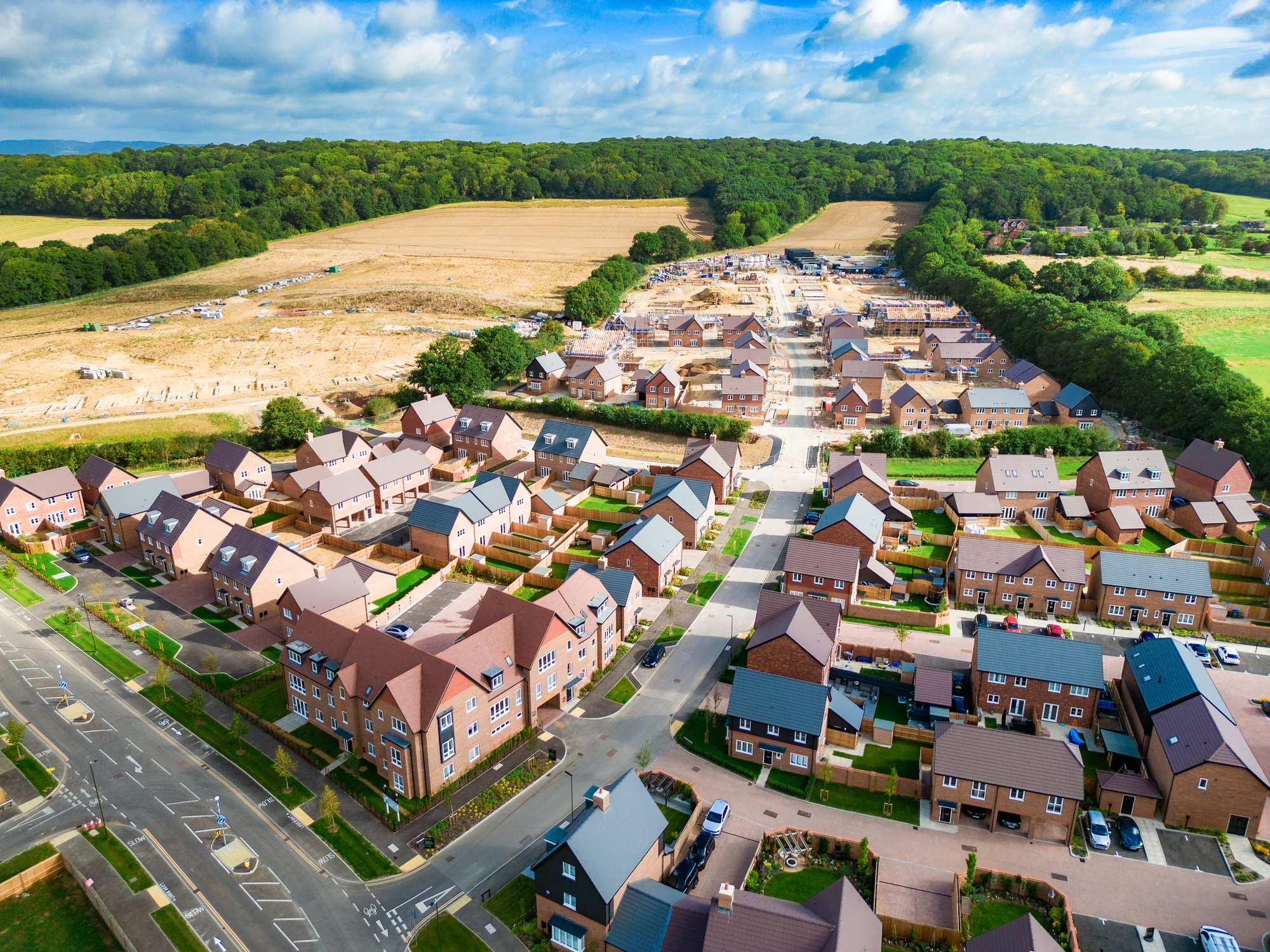
The Government's commitment to build 1.5 million new homes over the next five years has been widely welcomed as a solution to the UK's housing shortage and a catalyst for economic growth.
There is no doubt that housebuilding plays a vital role in supporting the economy. It creates jobs, stimulates investment, supports local supply chains and helps address genuine housing demand.
But there is another side to the story that receives far less attention.
Every new home requires land, and land is one of the UK's most limited resources.
The demand for housing continues to grow for a variety of reasons, including population growth, immigration, changing household structures, second-home ownership, investment purchases and an increasing number of people living alone. The pressure to build more homes is therefore understandable.
The question is not whether we need more homes.
The question is where they should be built and what impact that development has on the countryside.
When agricultural land is converted into housing developments, the consequences extend far beyond the loss of a field.
Natural habitats are removed. Hedgerows and trees are often lost. Soil is stripped and disturbed. Water infiltration is reduced as permeable surfaces are replaced with concrete, tarmac and buildings. Carbon stored within soils and vegetation is released, while future opportunities for carbon sequestration are reduced.
The environmental impact does not stop at the housing estate boundary.
New homes require roads, schools, hospitals, GP surgeries, utilities, retail facilities and leisure infrastructure. Each additional development creates further pressure on land, resources and the environment.
Supporters of large-scale housebuilding often point out that the land area required is relatively small when compared with the UK's total agricultural land base.
In isolation, that argument is correct.
The problem is that housing does not exist in isolation.
Agricultural land is already facing increasing competition from a wide range of other policy objectives, including Biodiversity Net Gain, woodland creation, solar farms, nature recovery projects, transport infrastructure, flood management schemes and commercial development.
Each individual demand may appear reasonable when viewed on its own.
Collectively, however, they create a significant and growing pressure on the finite amount of productive land available within the UK.
This is where the debate becomes far more important than simply counting hectares.
The UK currently farms around 17 million hectares of land and produces approximately 60% of the food it consumes. At the same time, the population continues to grow, placing increasing demand on both housing and food production.
The reality is that land is expected to deliver more than ever before.
It is expected to provide homes, produce food, store carbon, support biodiversity, reduce flooding, generate renewable energy and accommodate infrastructure development.
Yet very little discussion takes place about how these competing demands fit together within a coherent national land-use strategy.
One of the most overlooked consequences of development is the loss of the environmental services that farmland provides.
Healthy soils store carbon, support biodiversity, filter water and help regulate water movement through the landscape. Grassland, trees and hedgerows all contribute to carbon sequestration and environmental resilience.
Once land is covered by buildings, roads and hard surfaces, many of these functions are permanently lost.
The Environmental Act 2021 and Biodiversity Net Gain legislation attempt to compensate for some environmental losses by requiring developers to deliver biodiversity improvements. However, these improvements are often delivered elsewhere through the purchase of biodiversity units rather than within the development itself.
While this may satisfy a regulatory requirement, it raises an important question.
Are we genuinely improving the environment, or are we simply relocating environmental assets from one part of the countryside to another while continuing to lose productive agricultural land?
This becomes even more significant when biodiversity projects, woodland creation and other environmental schemes are themselves being delivered on farmland that was previously producing food.
The result is a growing competition for land that is rarely acknowledged within political debate.
None of this is an argument against building homes.
People need places to live.
The challenge is ensuring that housing policy is aligned with environmental policy, food security policy and long-term land-use planning.
Greater emphasis should be placed on brownfield redevelopment, urban regeneration and increasing housing density within existing settlements wherever practical. Building upwards rather than continually expanding outwards would help reduce pressure on productive farmland and natural habitats.
Yes, redevelopment of brownfield land can be more expensive and more complex than building on greenfield sites.
But if we are serious about protecting food security, biodiversity, carbon storage and the countryside itself, then these costs need to be viewed as investments rather than obstacles.
Land is not a limitless resource.
Every hectare can only be used once.
The real challenge facing the UK is not whether we build more homes, plant more trees or create more habitat. The challenge is deciding how we balance all of these competing demands on a finite land resource.
Without a clear national land-use strategy, we risk solving one problem while creating several others.
As a nation, we need more homes.
But we also need food security, environmental resilience and a countryside capable of supporting future generations.
The question is whether current policy is achieving that balance.